
Applications are closed!
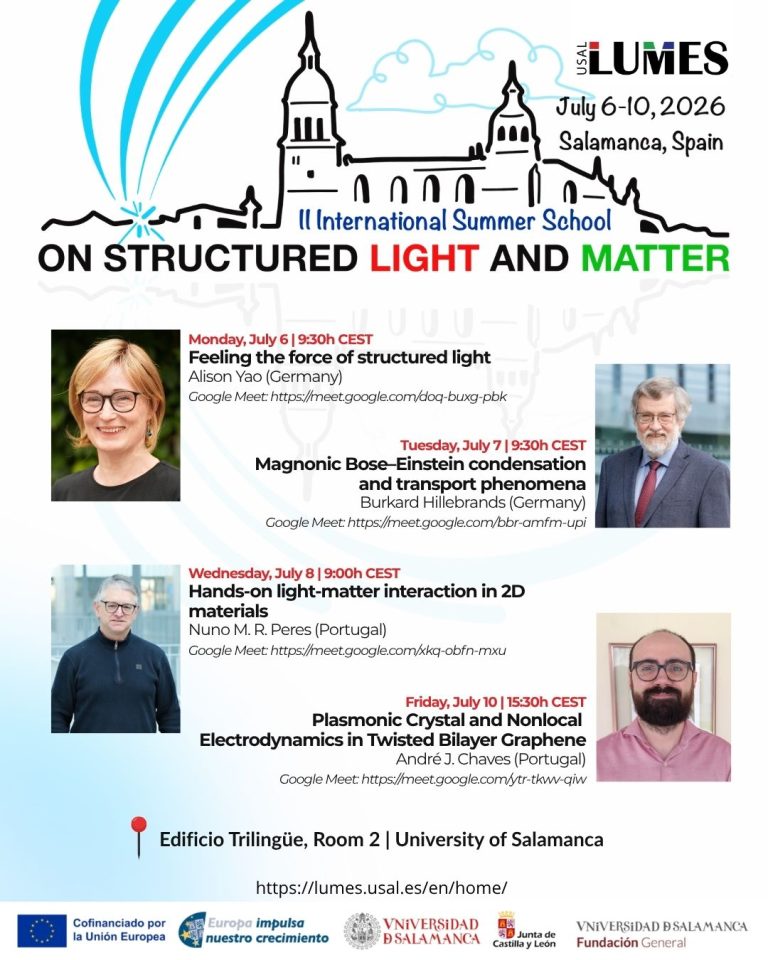
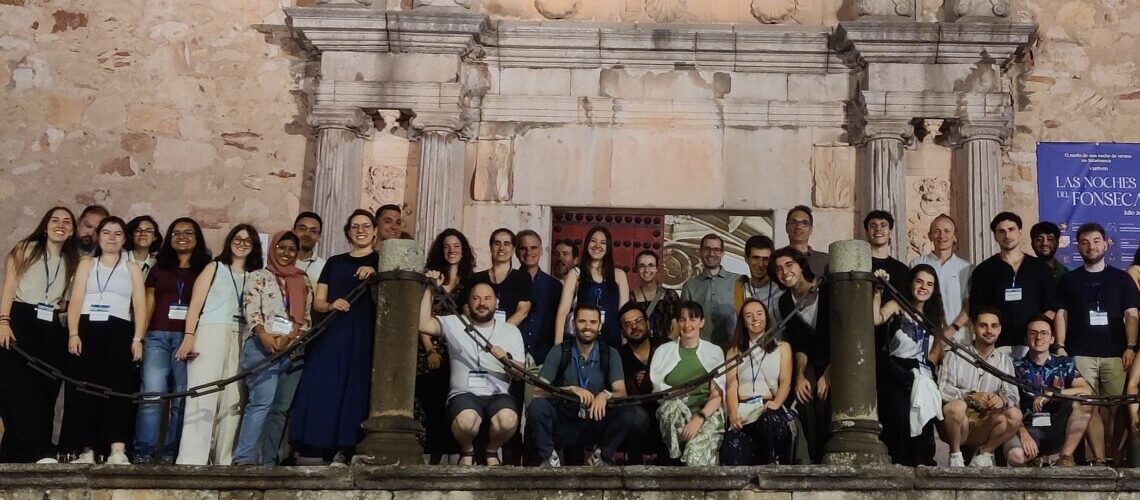
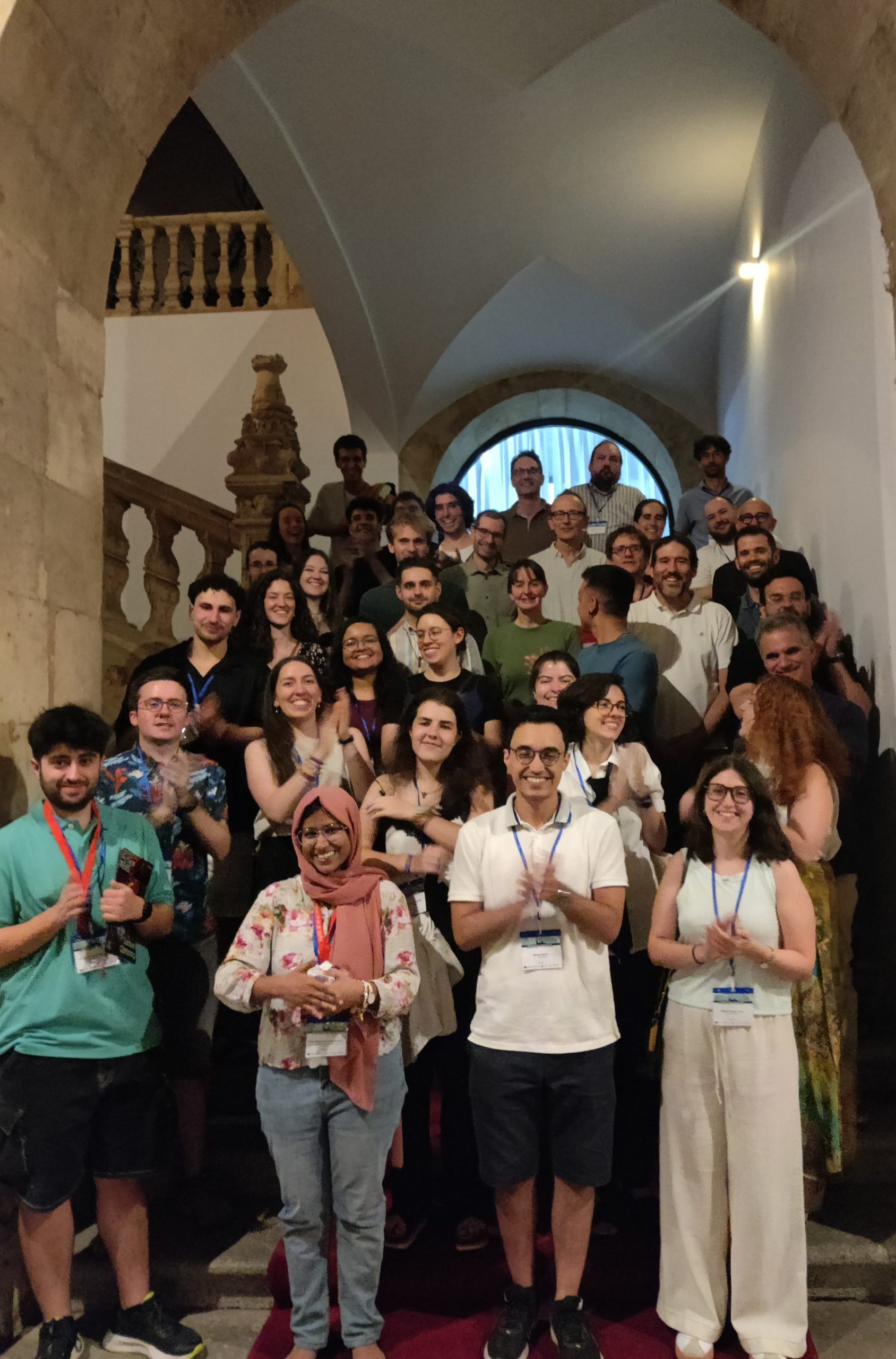
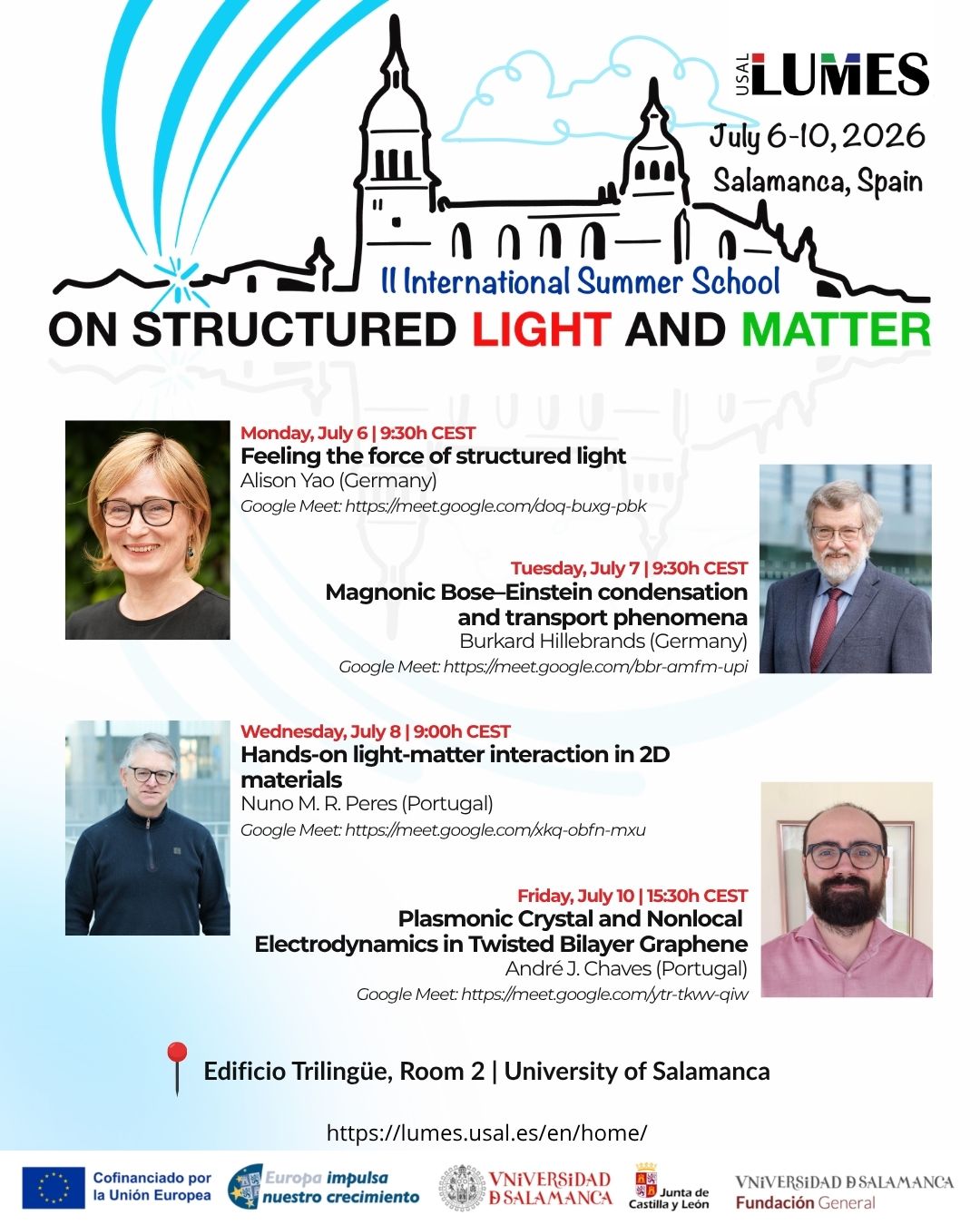
Welcome to the second edition of the International Summer School on Structured Light and Matter, organized by the LUMES Research Centre at the University of Salamanca. The school will take place from July 6 to 10 in Salamanca, Spain.
Deadline: April 10th
Time remaining until the start of school:
- 00Days
- 00Hours
- 00Minutes
- 00Seconds
presentation
The Summer School offers a week of intensive, interdisciplinary training in three key areas of current research:
- Structured light
- Structured matter
- Light-matter interaction
The school features 11 courses spread over 36 teaching hours, carefully structured to offer participants an advanced and practical introduction to these topics.
The program combines:
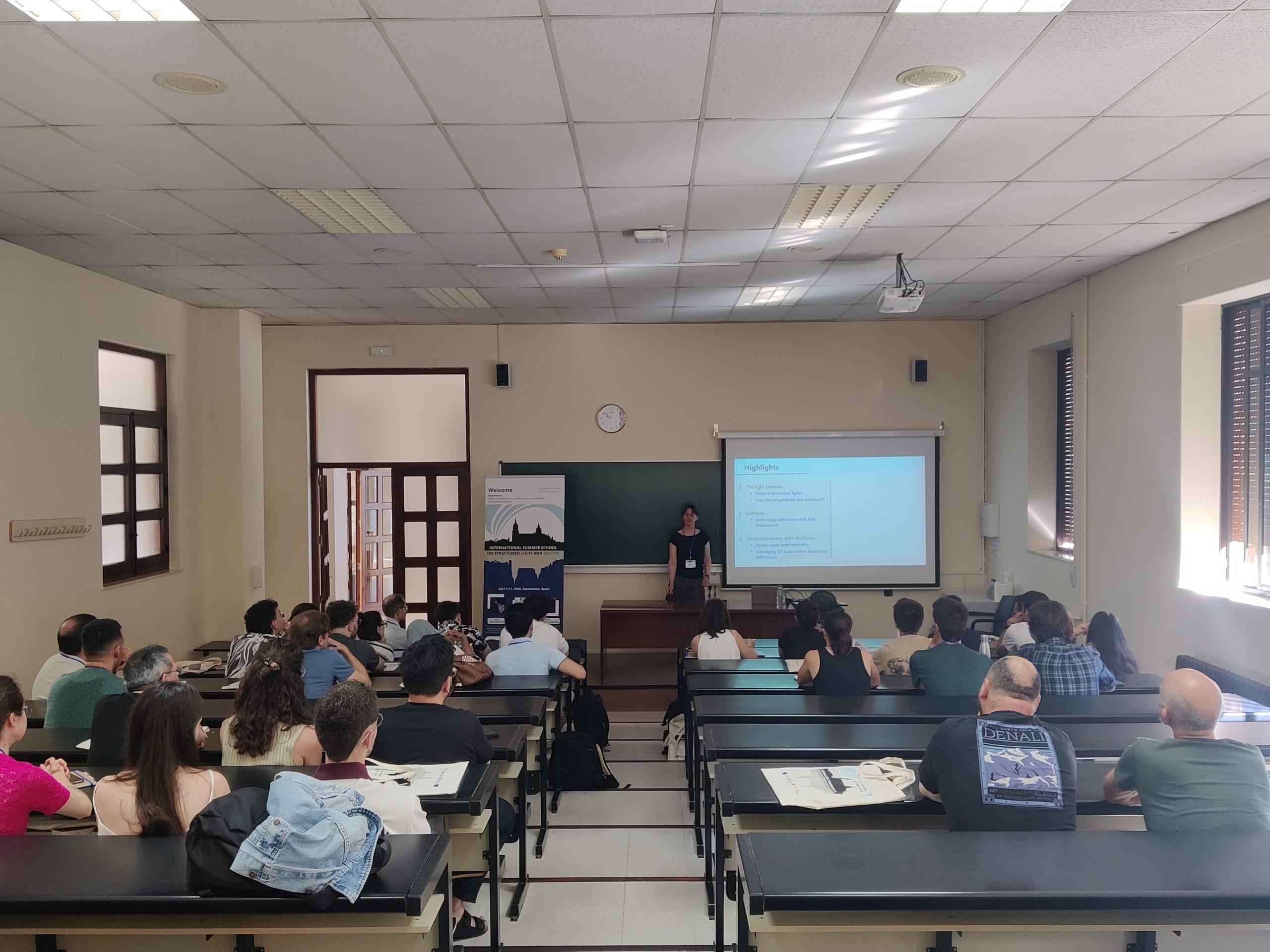
- theoretical sessions
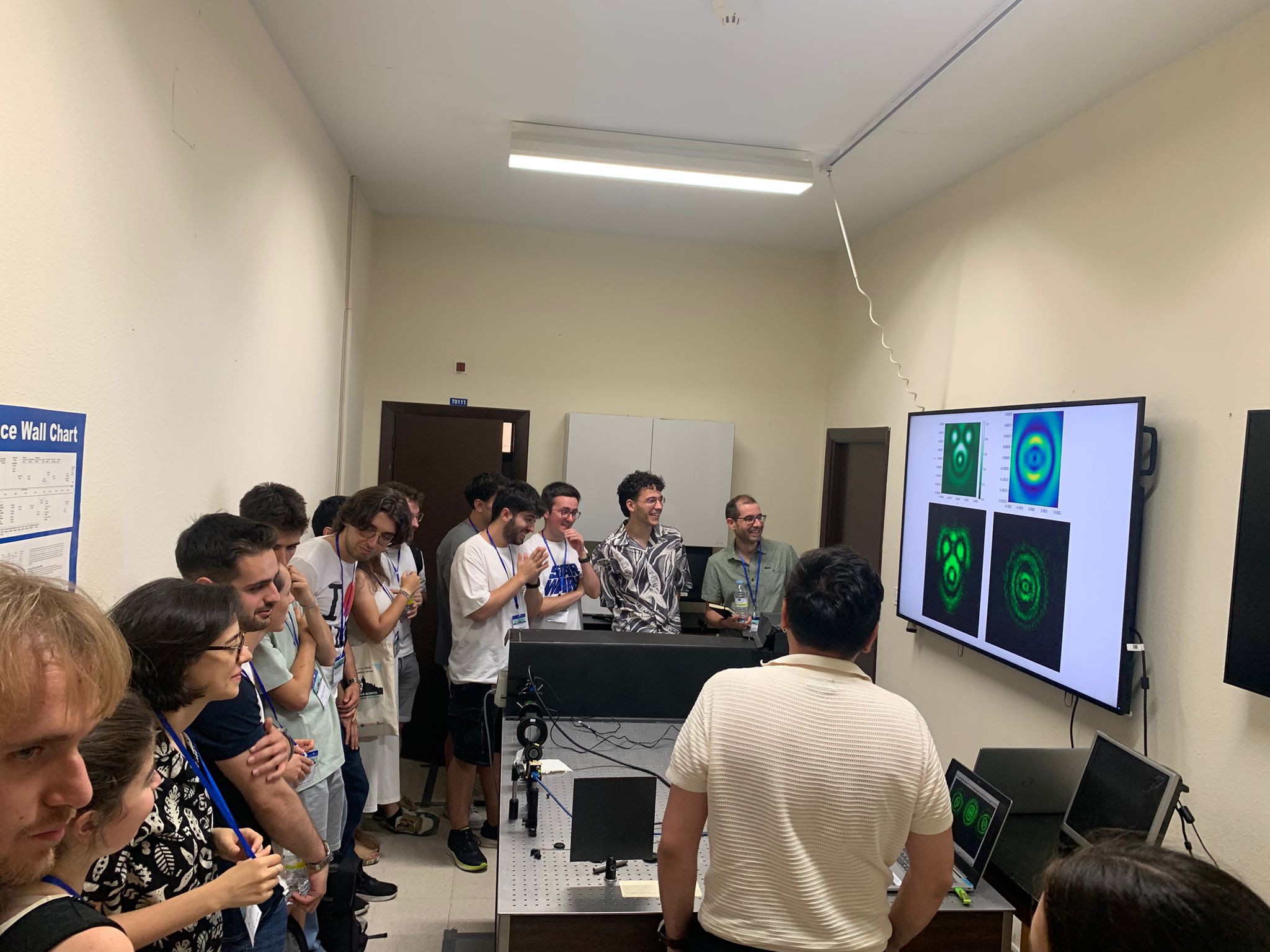
- practical modules
- four keynote lectures given by international experts
- 24 researchers from Universidad de Salamanca
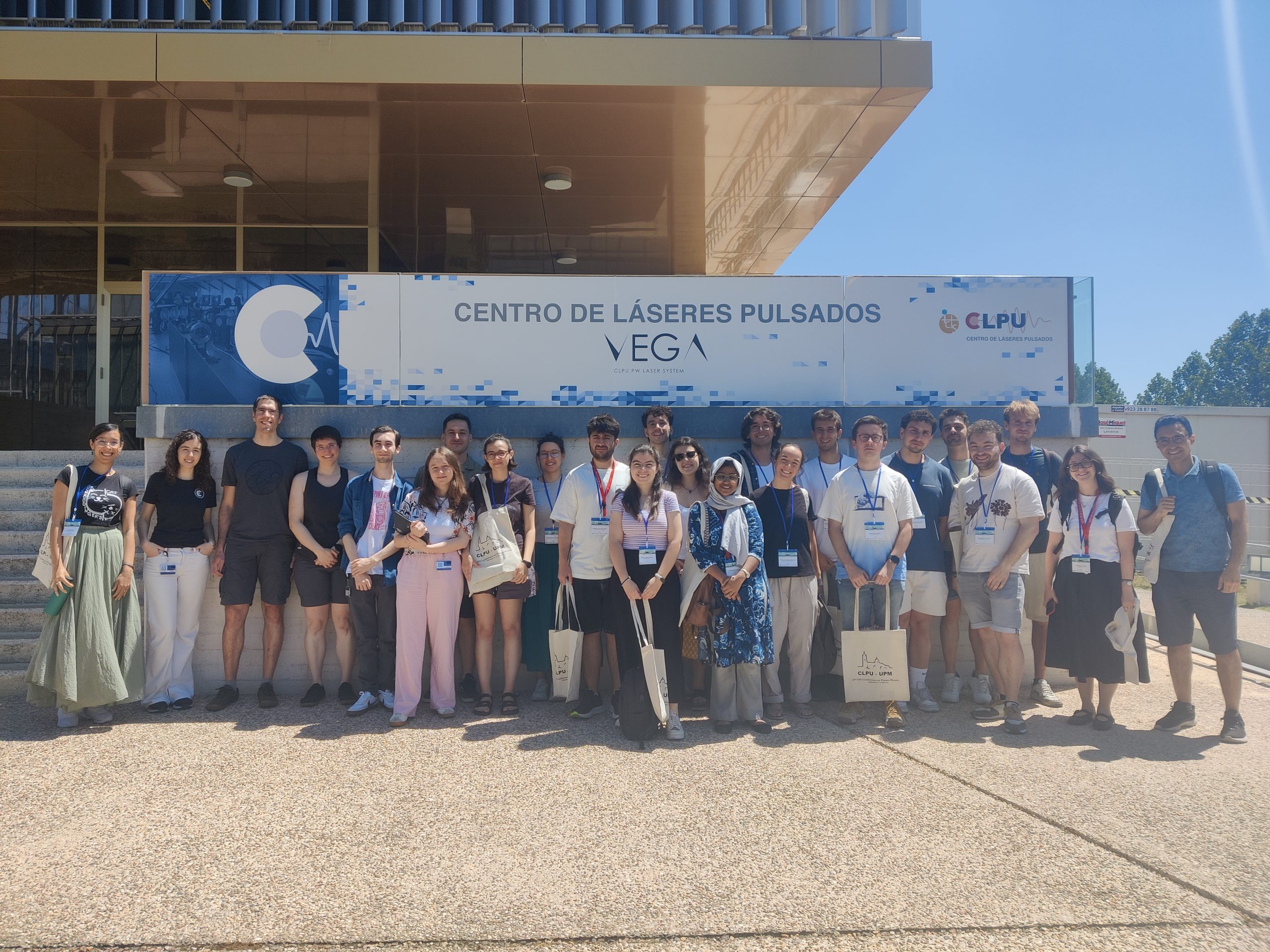
- a special visit to the Center for Pulsed Lasers (CLPU).
overview
The Summer School is open to a maximum of 18 participants, preferably undergraduate students in the final years of Physics, Chemistry, or Engineering, as well as Master’s students, and first-year PhD students in related fields.
Selected participants will receive:
Free accommodation and meals for the full duration of the school.
2 ECTS credits for USAL students enrolled in Physics, Chemistry, or Chemical Engineering programs.
Travel grants to partially cover international transportation to Salamanca (fixed amount, limited number of grants). These grants are available to international applicants who justify their request in the motivation letter included with the application form.
All activities will be conducted in English.
TOPICS
Topic 1: Structured light
Soon
After a brief introduction to the Python programming language and the Jupyter Notebooks environment, we will proceed to develop a simple yet illustrative code designed to visualize structured light beams. The code we will implement will enable us to explore the rich and intricate spatiotemporal patterns of the optical fields, focusing on both their amplitude and phase characteristics. Furthermore, we will examine how polarization—an essential property of light—manifests and evolves across the beam’s profile. This computational approach offers an accessible way to study structured light, providing insights that are often difficult to obtain through purely experimental means.
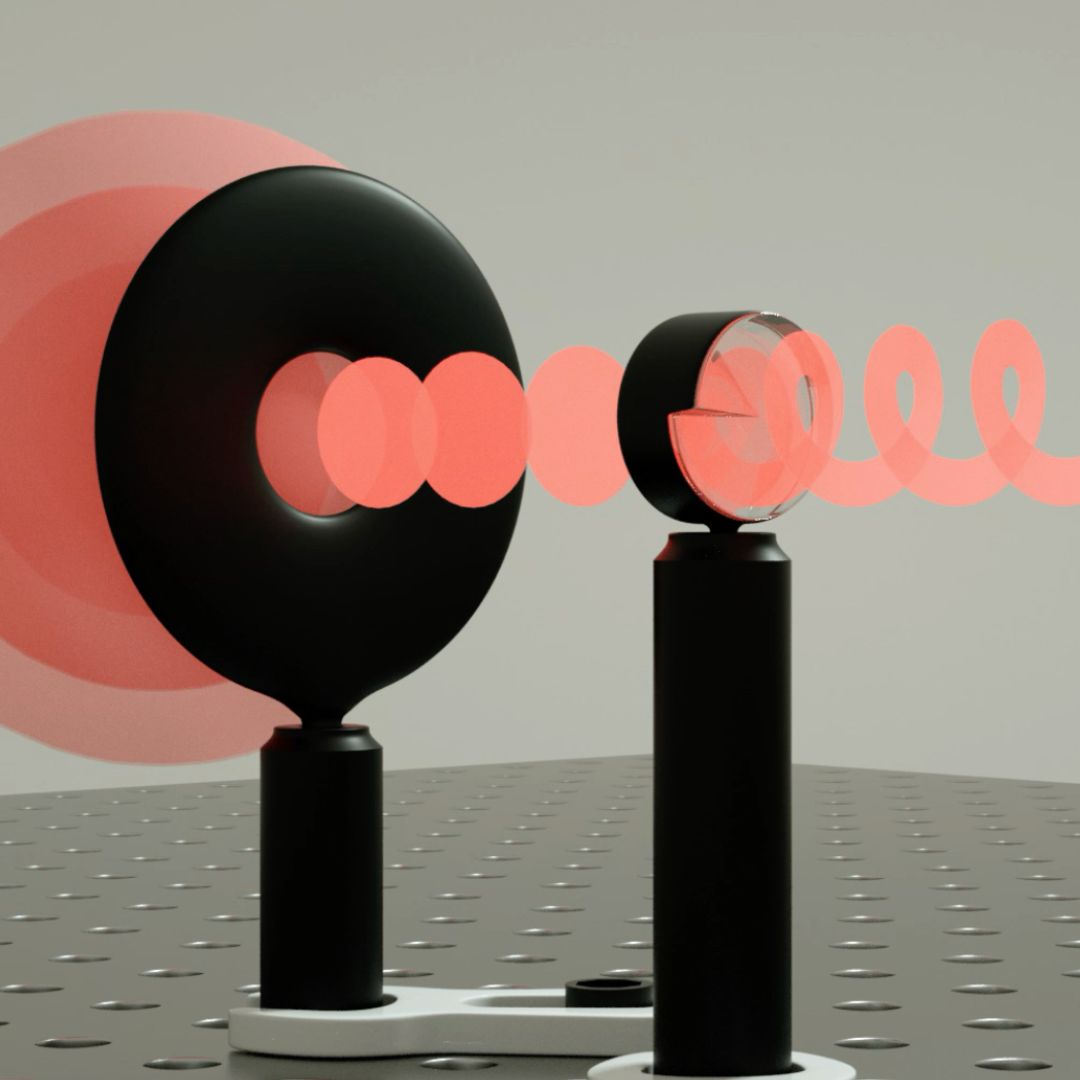
From the experimental point of view, structured light (in terms of spatial energy distribution, polarization…) finds multiple applications, from telecommunications to spectroscopy and microscopy, among others. Structured light beams, either in CW or pulsed, can be generated using different methods, involving the most common the use of phase plates or spatial light modulators (SLMs). The main objective of this course is to get acquainted with some of those methods. For that purpose, we will generate different types of structured beams, such as vector beams (radial and azimuthal) and vortex beams with optical angular momentum (OAM), and will characterize their exotic features.
This course offers a brief introduction to the generation of ultrashort laser pulses. In the theoretical section, we will first cover the fundamental concepts of ultrafast optics, including the requirements for producing such pulses and the techniques available for their generation. We will also discuss how these pulses can be amplified to enhance their usefulness for various applications.
The experimental session will include a visit to the high-power laser systems at the Ultrafast Optics Laboratory of the USAL, where participants will gain an overview of various applications. Special emphasis will be placed on the measurement of ultrashort light pulses on the femtosecond timescale, and attendees will have the opportunity to observe and take part in an actual measurement in the lab.
Topic 2: Structured matter
Soon
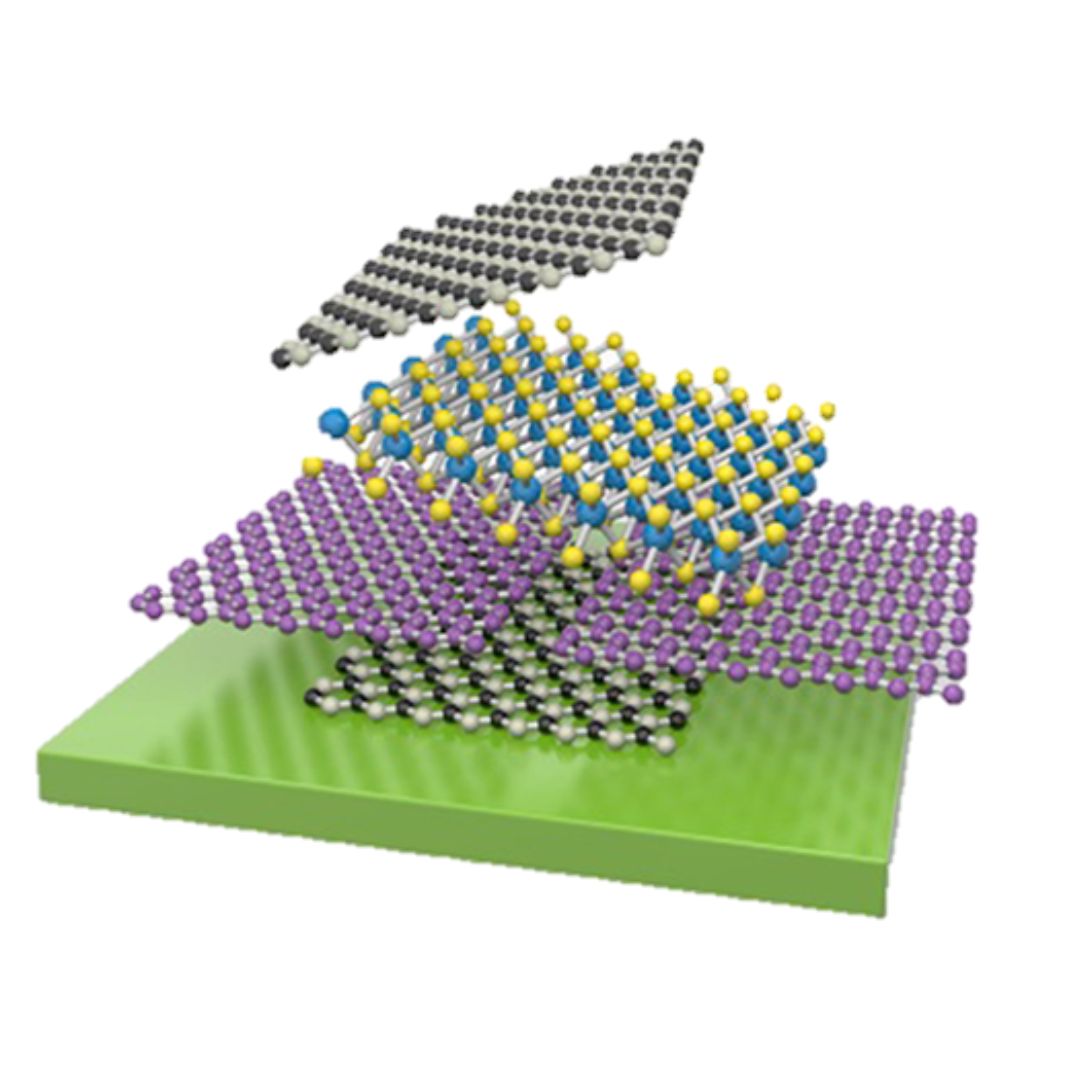
Two-dimensional (2D) materials are intriguing, atomically-thin systems with special quantum properties that make them useful in applications such as emerging electronics, batteries, and novel sensors.
In this workshop, the students will learn how to fabricate high-quality two-dimensional quantum materials (e.g. graphene, hexagonal boron nitride) and stack them to form the so-called van der Waals heterostructures using state-of-the-art techniques.
The control of magnetic properties at the nanoscale is at the heart of the rapidly emerging field of spintronics. This tutorial is intended as a practical introduction to the world of magnetic nanostructures. In the first part we will present the theoretical framework used to investigate the magnetic response at the nanoscale, the equation that governs magnetization dynamics and the different interactions that come into play. In the second part we will use the simulation package mumax3 to investigate some basic phenomena in magnetic nanostructures, such as hysteresis loops, domain wall motion, spin waves, etc.
In this course, we will show you different nanostructures such as carbon nanotubes, graphene, nanoparticles, and how to take advantage of their properties. Inspired by biological micro and nanostructures, we will learn how to produce materials with enhanced mechanical and multifunctional properties.
Topic 3: Light-matter interaction
Soon
Soon
Quantum materials are systems with intriguing properties that make them useful in applications such as emerging electronics, batteries, and novel sensing technologies.
In this workshop, the students will learn how to measure the electrical and optoelectronic properties of devices made from quantum materials at visible and infrared frequencies. Students will also learn how to relate these exciting device responses to specific electronic properties of the actual constituting material (e.g. with their electronic bandstructure).
Femtosecond lasers are very versatile tools for the microstructuring of all types of materials, especially in the case of transparent dielectrics. The high intensity achieved in the focal region and the extremely short duration of the laser-matter interaction mean that material can be removed from the surface of the sample (ultra-fast ablation) or optically modified in the bulk. This procedure allows, for instance, the creation of channels for microfluidic applications with unprecedented precision or the fabrication of photonic microdevices.
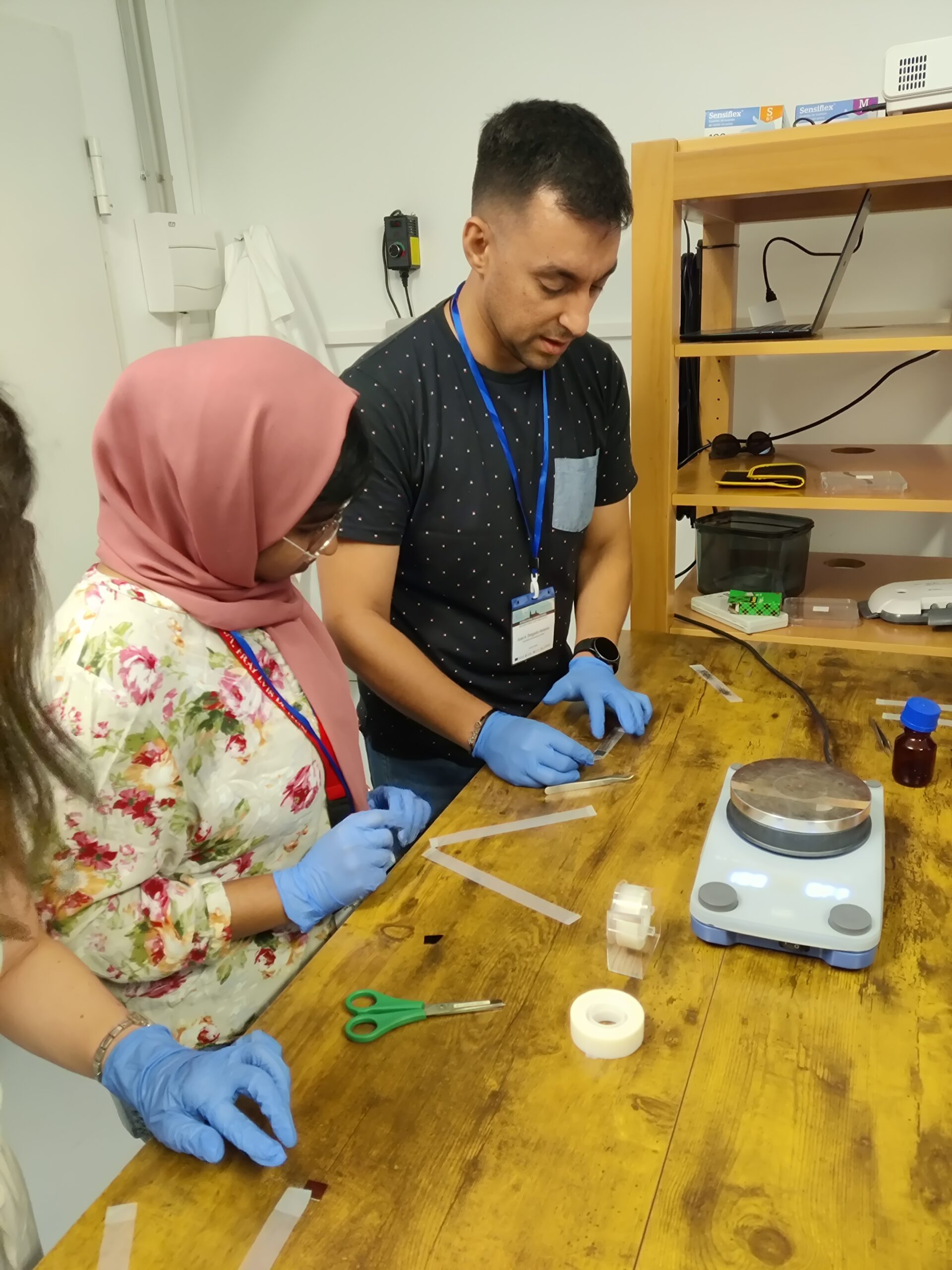
In this course we will introduce the students to sample handling, programming of high-precision XYZ micro positioners, operation of a microprocessing station with ultra-short pulse lasers and use of an optical microscope.
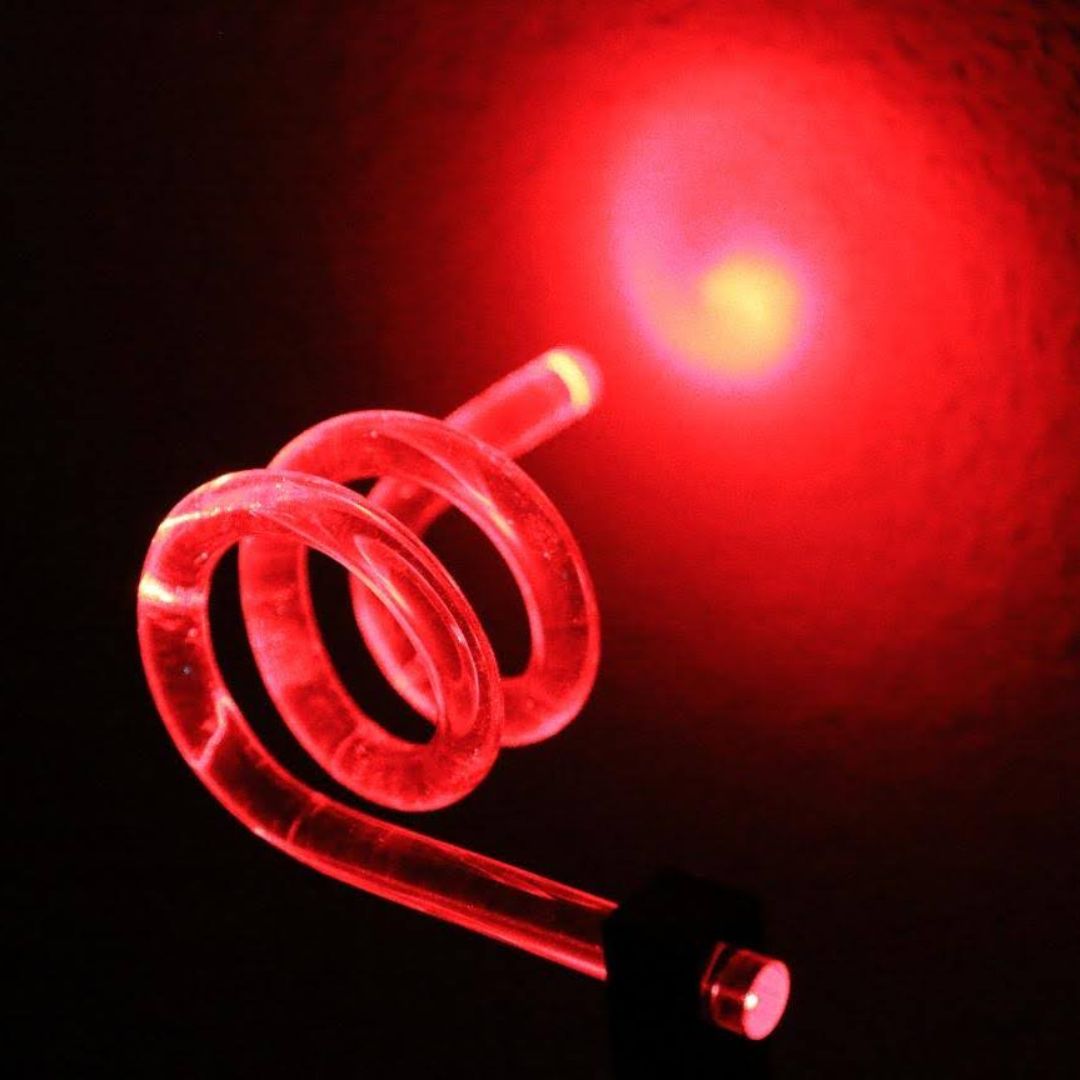
This introductory course aims to present the world of optical fibers. We will explore the underlying principles of optical guiding, structural components and different types of fibers, and understand these concepts in action through in-class experiments and illustrative simulations. Additionally, the course will present the applications of optical fibers in diverse fields, from high-speed communication to sensing technologies. Finally, we will take a brief look at the current research trends, including active fibers and photonic crystal fibers, offering a glimpse into the future of this technology.
INTERNATIONAL KEYNOTE SPEAKERS
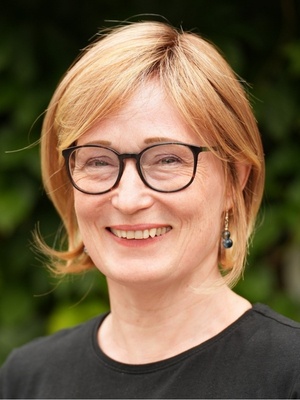
Alison Yao is a senior lecturer in the Computational and Nonlinear Optics (CNQO) Group at the University of Strathclyde in Glasgow, Scotland, and leads the Fully-Structured Light Group (FOAM).
Her research ranges from understanding the fundamental properties of light carrying orbital angular momentum (OAM) to investigating its interaction with nonlinear media, including Kerr media, cold atoms, and ultracold atoms. In particular, she develops novel methods for creating fully-structured light for applications across nonlinear, quantum, and atomic physics such as sculpting Bose–Einstein condensates to generate ultracold atom–light solitons.
She is also the Deputy Director of Teaching for the department and founder of the Women in Strathclyde Physics Association (WiSPA), which aims to support and encourage everyone identifying as a woman to continue on a STEM career path.
Abstract: Structuring light — engineering optical fields to possess tailored phase, amplitude, and polarization distributions — can have significant implications in how it interacts with matter and opens new possibilities in engineering light distributions for particular applications. For example, beams carrying orbital angular momentum (OAM) enable the transfer of both linear and rotational momentum to matter, giving rise to optical forces that allow contactless trapping and rotation of atoms, molecules and microscopic particles.
In this talk I will discuss how the phase and polarisation of light behave in nonlinear media. For example, I will show how we can design light to fragment into a controllable number of optical spatial structures. This is relevant for applications in communications systems and information processing, for example as optical memories and registers. I will also show how these fragments of light can guide atomic transport in Bose–Einstein condensates through optomechanical forces. These demonstrations reveal that structured light may provide a versatile platform for generating controllable optical potentials, atomic circuits, and rotating lattices, all governed by the optical forces encoded in the underlying light structure.
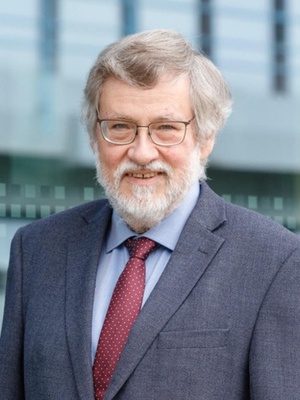
Burkard Hillebrands is a Professor Emeritus of experimental physics at the Rhineland-Palatinate University of Technology (RPTU), Kaiserslautern. After studying at the University of Cologne and completing a postdoctoral stay at the Optical Sciences Center in Tucson, Arizona, he became an Associate Professor at the University of Karlsruhe in 1994. Since 1995, he has been a Full Professor at the University of Kaiserslautern. From 2006 to 2014, he served as Vice President for Research, Technology, and Innovation at the University of Kaiserslautern. From 2016 to 2017, he was Scientific Director of the Leibniz Institute for Solid State and Materials Research Dresden.
His research focuses on experimental magnetism, in particular magnonics. He is especially interested in nonlinear magnonic phenomena, magnonic crystals, magnon gases, magnon condensates, and magnonic supercurrent phenomena, with a view toward applications in novel information technologies such as magnon logic.
From 2019 to 2022, he served as President of the European Magnetism Association. From 2015 to 2017, he was Chair of the International Union of Pure and Applied Physics (IUPAP), Commission C9: Magnetism. He is a member, Chair of the Class of Mathematics and Natural Sciences, and Vice President of the Academy of Sciences and Literature, Mainz. He is a member of the National Academy of Science and Engineering (acatech) and of the European Academy of Sciences (EurASc). He is an IEEE Fellow, APS Fellow, and Fellow of the Institute of Physics (London). In 2016, he received an ERC Advanced Grant from the European Commission, and in 2023, the Achievement Award of the IEEE Magnetics Society. He served on the Administrative Committee of the IEEE Magnetics Society and was Honors & Awards Chair from 2013 to 2018. From 2018 to 2024, he was Chair and member of the Scientific Advisory Board of the Helmholtz Center Dresden-Rossendorf (HZDR), and also a member of the HZDR Supervisory Board.
He has authored more than 430 refereed journal articles, book contributions, and several patents.
Abstract:
Burkard Hillebrands, Rheinland-Pfälzische Technische Universität Kaiserslautern-Landau, 67663 Kaiserslautern, Germany
Bose–Einstein condensation (BEC) is a fundamental phenomenon of quantum statistical physics that occurs in a wide range of systems, from ultracold atomic gases to quasiparticles such as photons and magnons. This lecture provides an accessible introduction to BEC, starting from its basic principles and extending to its realization in driven, nonequilibrium systems.
I will first outline the key concepts of Bose–Einstein statistics and condensation of real particles and then introduce quasiparticle condensates. The main part of the lecture will focus on magnon Bose–Einstein condensation in magnetic materials such as yttrium iron garnet, where exceptionally long quasiparticle lifetimes enable condensation at room temperature. I will discuss the physical mechanisms responsible for magnon accumulation at the bottom of the spectrum, including nonlinear magnon–magnon interactions and cascade scattering processes.
Building on this, I will present transport phenomena in magnon condensates. In contrast to incoherent magnon transport, the presence of macroscopic phase coherence leads to a qualitatively different behavior. In particular, I will discuss supercurrent-like transport driven by phase gradients, as well as experimentally observed propagation of collective excitations and spatial redistribution of the condensate density under controlled conditions.
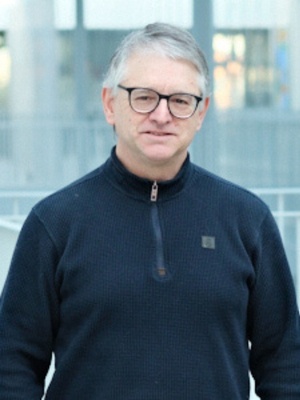
Burkard Hillebrands is a Professor Emeritus of experimental physics at the Rhineland-Palatinate University of Technology (RPTU), Kaiserslautern. After studying at the University of Cologne and completing a postdoctoral stay at the Optical Sciences Center in Tucson, Arizona, he became an Associate Professor at the University of Karlsruhe in 1994. Since 1995, he has been a Full Professor at the University of Kaiserslautern. From 2006 to 2014, he served as Vice President for Research, Technology, and Innovation at the University of Kaiserslautern. From 2016 to 2017, he was Scientific Director of the Leibniz Institute for Solid State and Materials Research Dresden.
His research focuses on experimental magnetism, in particular magnonics. He is especially interested in nonlinear magnonic phenomena, magnonic crystals, magnon gases, magnon condensates, and magnonic supercurrent phenomena, with a view toward applications in novel information technologies such as magnon logic.
From 2019 to 2022, he served as President of the European Magnetism Association. From 2015 to 2017, he was Chair of the International Union of Pure and Applied Physics (IUPAP), Commission C9: Magnetism. He is a member, Chair of the Class of Mathematics and Natural Sciences, and Vice President of the Academy of Sciences and Literature, Mainz. He is a member of the National Academy of Science and Engineering (acatech) and of the European Academy of Sciences (EurASc). He is an IEEE Fellow, APS Fellow, and Fellow of the Institute of Physics (London). In 2016, he received an ERC Advanced Grant from the European Commission, and in 2023, the Achievement Award of the IEEE Magnetics Society. He served on the Administrative Committee of the IEEE Magnetics Society and was Honors & Awards Chair from 2013 to 2018. From 2018 to 2024, he was Chair and member of the Scientific Advisory Board of the Helmholtz Center Dresden-Rossendorf (HZDR), and also a member of the HZDR Supervisory Board.
He has authored more than 430 refereed journal articles, book contributions, and several patents.
Abstract:
Burkard Hillebrands, Rheinland-Pfälzische Technische Universität Kaiserslautern-Landau, 67663 Kaiserslautern, Germany
Bose–Einstein condensation (BEC) is a fundamental phenomenon of quantum statistical physics that occurs in a wide range of systems, from ultracold atomic gases to quasiparticles such as photons and magnons. This lecture provides an accessible introduction to BEC, starting from its basic principles and extending to its realization in driven, nonequilibrium systems.
I will first outline the key concepts of Bose–Einstein statistics and condensation of real particles and then introduce quasiparticle condensates. The main part of the lecture will focus on magnon Bose–Einstein condensation in magnetic materials such as yttrium iron garnet, where exceptionally long quasiparticle lifetimes enable condensation at room temperature. I will discuss the physical mechanisms responsible for magnon accumulation at the bottom of the spectrum, including nonlinear magnon–magnon interactions and cascade scattering processes.
Building on this, I will present transport phenomena in magnon condensates. In contrast to incoherent magnon transport, the presence of macroscopic phase coherence leads to a qualitatively different behavior. In particular, I will discuss supercurrent-like transport driven by phase gradients, as well as experimentally observed propagation of collective excitations and spatial redistribution of the condensate density under controlled conditions.
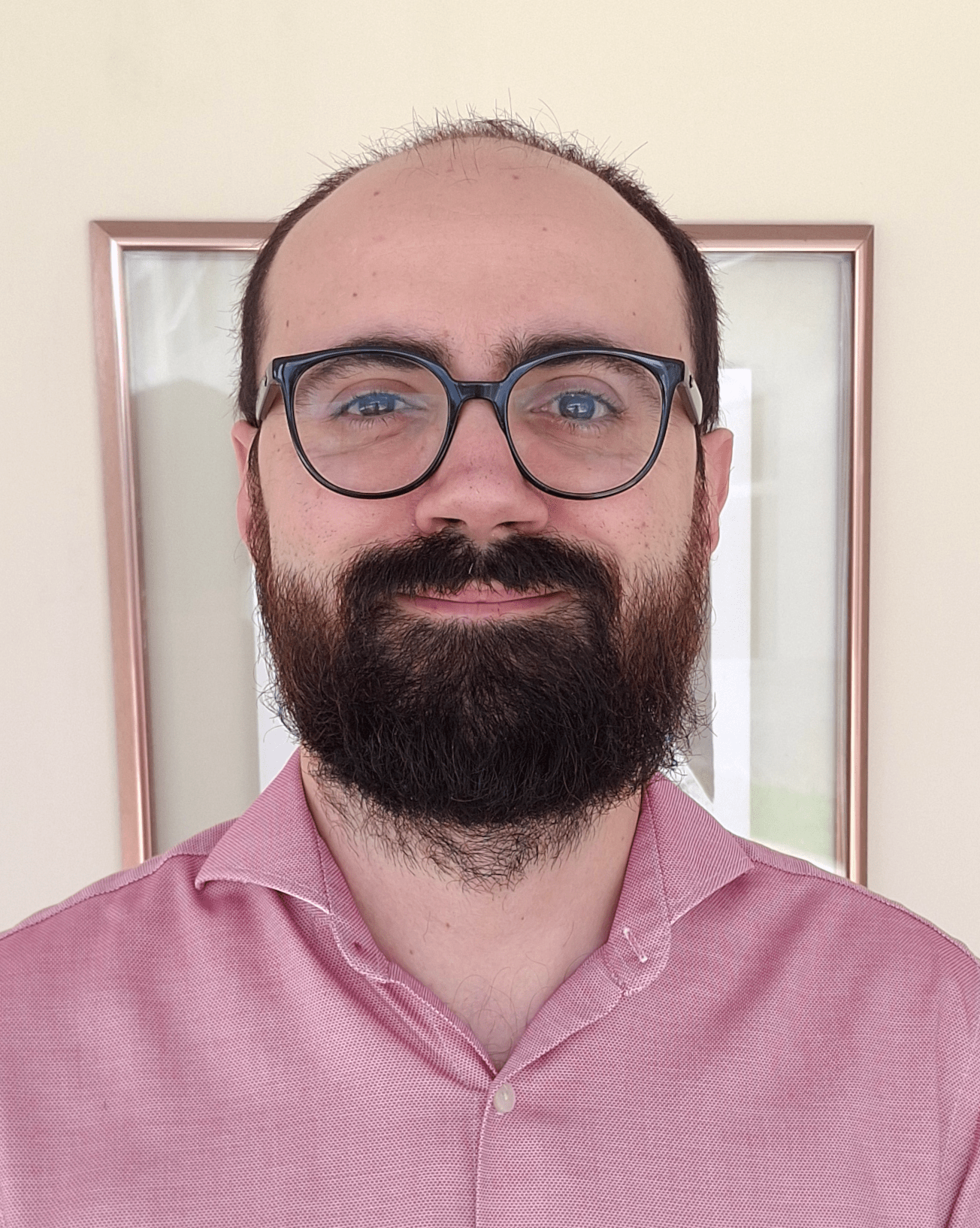
André Chaves graduated from the Aeronautics Institute of Technology in electronic
engineering and holds a master degree in physics from the same institution. He did his Phd
in physics in University of Minho (2018). He occupied a position of Professor at the
Aeronautics Institute of Technology between 2018 and 2025. He was a visiting researcher in
the International Iberian Nanotechnology Laboratory and the Southern University of
Denmark. Since 2025 he is an Assistant Researcher at University of Minho. He works on
two-dimensional materials, few-body physics in condensed matter, superconducting circuits,
and light-matter interaction, and has authored 36 research papers.
Abstract:
A. J. Chaves
Physics Center of Minho and Porto Universities (CF-UM-UP) and Department of Physics, University of Minho, P-4710-057 Braga, Portugal
Twisted bilayer graphene (TBG), which presents a moiré structure, supports emergent phenomena, such as superconductivity at the magic angle. For very small twist angles, TBG undergoes atomic reconstruction, creating AB, AA and BA domains. The AB-BA interface supports edge states, which contribute to the optical conductivity, effectively modulating the local plasmon wavenumber in the supercell structure, creating a plasmonic crystal.
In this talk, we will discuss scanning near-field optical measurements (SNOM) of TBG on talc, a van der Waals phyllosilicate material. The SNOM measurements excite and probe the plasmonic crystal structure. For TBG deposited on this substrate, which supports phonon-polaritons in the infrared, near the phonon resonances we observe the formation of Surface Plasmon-Phonon-Polaritons (SPPP), and the plasmonic crystal structure disappears. We will discuss the hydrodynamic model for the two-dimensional electronic gas. We will show that a nonlocal description of the optical conductivity is required to quantitatively reproduce the measured SPPP dispersion relation.
SUBMISSION REQUIREMENTS:
You are
- an Undergraduate student in the final years of Physics, Chemistry, or Engineering
- a Master’s students in related fields
- a first-year PhD student in related fields
Maximum number of participants: 15
APPLICATION PROCESS:
The application procedure consists of submitting:
- a form with your personal data
- a PDF file containing both your CV and motivation letter
DETAILED PROGRAM
Discover SALAMANCA
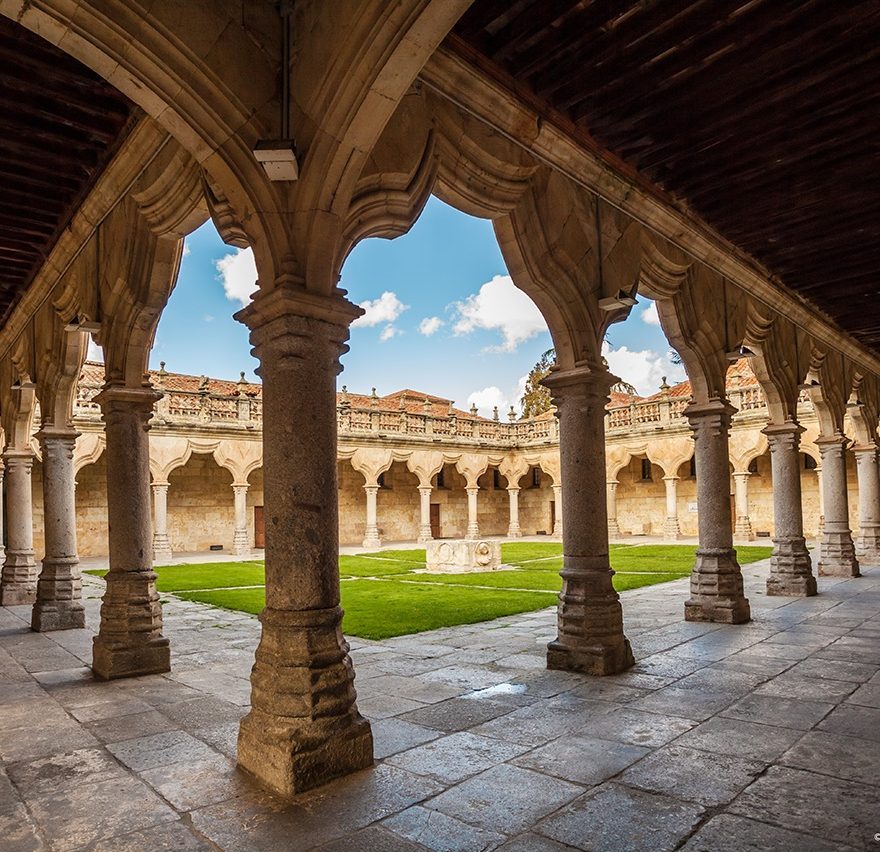
Located in western Spain, Salamanca is a UNESCO World Heritage city known for its rich history, stunning architecture, and vibrant student atmosphere. Home to one of the oldest universities in Europe, founded in 1218, the city blends centuries of academic tradition with a dynamic, modern lifestyle.
Walking through its historic streets, you’ll find world-renowned landmarks such as the University façade, the Plaza Mayor, and the twin cathedrals—alongside cozy cafés, amazing gastronomy, and international communities. As a city that lives and breathes knowledge, Salamanca is the perfect place to learn, connect, and experience Spain at its most authentic.

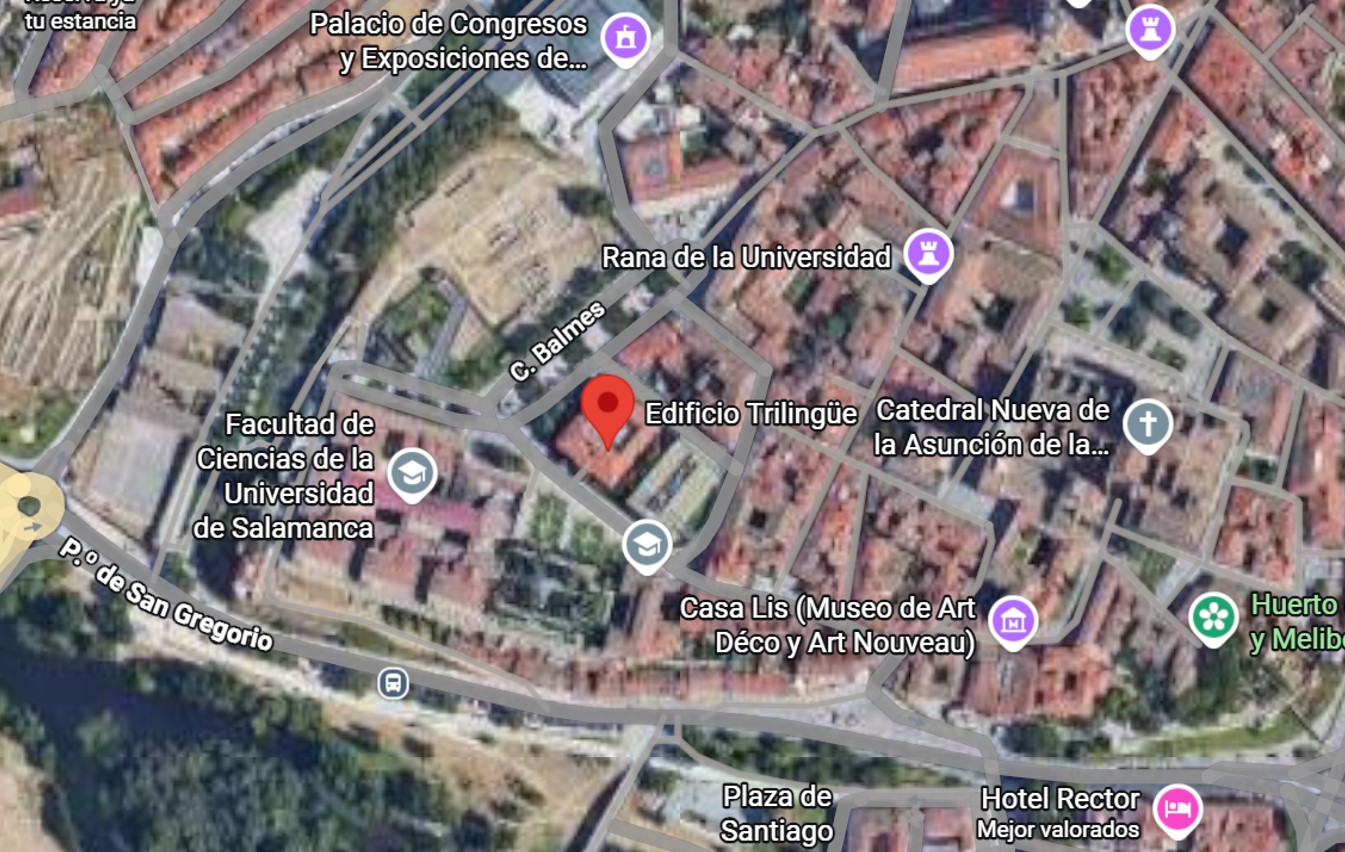
Location:
Edificio Trilingüe
Universidad de Salamanca
Salamanca, Spain
Download the poster in PDF format:
Event Organizers:




The Summer School will be held in the research groups and centers integrated into LUMES: Laser Applications and Photonics (ALF); Quantum Materials and Devices (QMADE); Research Group on Simulation of Magnetic Nanostructures (SINAMAG); Pulsed Laser Center (CLPU); Laboratory of Mechanical Engineering Applied to Design, Manufacturing and Applications of Composite Materials (LAMCOM).
Event Sponsors:
